Supporting First Responders When It Matters Most
Critical Incident Stress Management (CISM)
As first responders, you face critical incidents—traumatic, unexpected, high-stakes events—that demand more than just physical readiness. At TCTI, our Critical Incident Stress Management (CISM) services are designed to give first responders the support, tools, and community required to process, regroup, and move forward. We respond in the moment, proactively, and every step in between—24/7, 365.
Built for the Job. Proven in the Field.
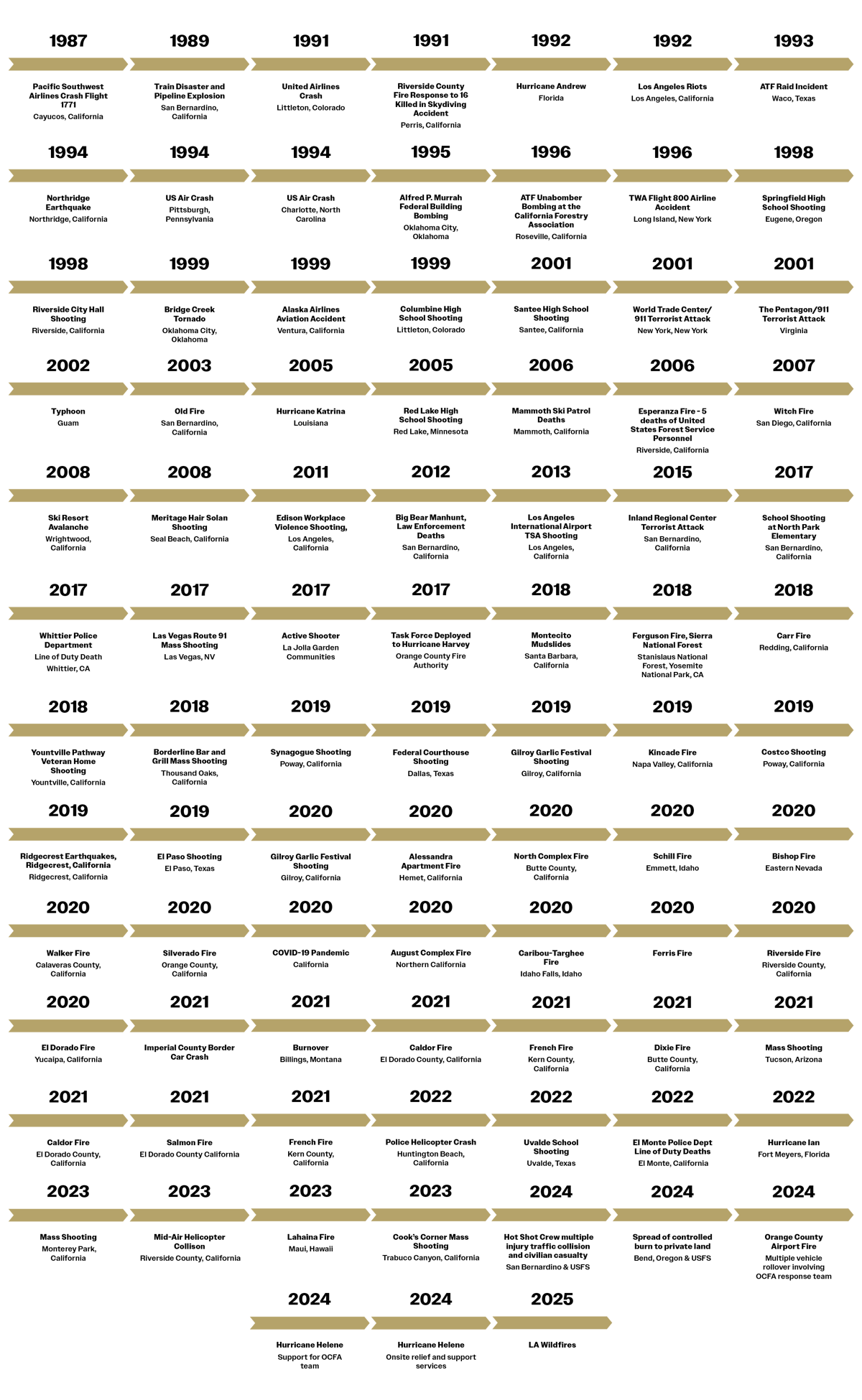
For more than 40 years, The Counseling Team International has supported public safety agencies during their most critical moments. From mass casualty events to line-of-duty deaths, natural disasters, and officer-involved shootings, our team has provided immediate, on-the-ground support to thousands of first responders nationwide. This chart represents just a portion of the incidents where TCTI has been called in to help stabilize teams, support leadership, and ensure personnel have the tools to continue serving.
What Is CISM?
Critical Incident Stress Management is an integrated set of crisis interventions aimed at reducing the negative psychological impacts of critical incidents. Unlike long-term therapy, it’s a set of tactics that can address trauma early and effectively, building resilience, and helping individuals and teams return to a healthier baseline as quickly as possible. It includes:
On-scene and immediate support
Structured group interventions
Follow-up support and resources
TCTI’s CISM Services & Offerings
TCTI offers a full spectrum of CISM services, tailored for public safety professionals. Here’s what we provide:
24/7 On-Call & Phone Consultations
When an incident occurs, supervisors or peers can reach out immediately for crisis support and expert guidance.
On-site Critical Incident Response
If required, a trained CISM team can come to your department or incident location to deliver structured support.
Critical Incident Debriefings
Facilitated group sessions that let participants share their experiences, reactions, and get psychoeducation about stress responses and coping strategies. These typically happen 24-72 hours after the incident.
Defusings
These are more immediate, shorter-format group or peer‐led check-ins (sometimes on scene or soon after), designed to help stabilize and normalize reactions early.
Pre-Incident Training & Education
Workshops for peer support teams, leaders, and responders themselves. These provide awareness of what stress reactions are, how to identify them, and how to help support one another.
Development of Peer Support Programs
TCTI helps departments build or expand peer support infrastructure: selecting peer supporters, training them, and setting up ongoing peer-led support.
Follow-Up / Referral Services
After debriefings or defusings, our team offers follow-up check-ins. If more care is needed (e.g. therapy, outpatient), we assist with referrals.
Why CISM at TCTI Works
At TCTI, our CISM services are built on four cornerstones that set us apart.
First, every intervention is delivered by culturally competent clinicians and peer supporters who truly understand first responder culture, the unique pressures of the job, and the “silent burden” that comes with repeated exposure to trauma.
Second, we ensure immediate access, with trained staff available 24/7 to provide consultations or respond on-site when an incident occurs—because timing matters.
Third, our model is a comprehensive, multi-phase approach that supports individuals and teams before, during, and after an incident, offering preparation, immediate care, structured follow-ups, and tools to build resilience for the future.
Above all, our work is confidential and peer-centered. Participation is always voluntary, private, and carried out with deep respect for each responder’s role, experience, and identity, while placing peer support at the heart of the process.

Is CISM Right for Your Agency?
CISM can help if you or members of your team:
- Were involved in or witnessed a critical incident, such as line-of-duty death, serious injury, disaster, multiple casualty call, pediatric event, traffic collision, close call, etc.
- Feel overwhelmed, disconnected, angry, or have trouble sleeping/eating after the incident.
- Want to get support early, without waiting for symptoms to escalate.
- Are part of a department that values wellness, resilience, and peer support.
CISM is an important early intervention that - over time - can reduce persistent PTSD and maladaptive coping mechanisms like substance misuse.
What to Expect
Supervisor or Peer Contact
When an event happens, someone from your department (supervisor, peer support coordinator) can reach out to initiate support.
Immediate Intervention
This might be a defusing to stabilize, provide information about stress reactions, and allow safe venting.
Structured Debriefing
A facilitated group meeting, usually 1-3 hours, in the 24-72 hour window. Focus on sharing, reaction, coping strategies, and normalization.
Follow-Up & Resource Connection
Checking in afterward, offering referrals if needed, ensuring no one is left struggling alone.

Validated Outcomes
- Faster return to “baseline” functioning—meaning less disruption to work, relationships, and daily life.
- Reduced risk of longer-term mental health issues (e.g., PTSD, chronic stress) when support is timely.
- Stronger peer cohesion and resilience: shared experience and peer support tend to build trust, lessen isolation.
- Improved department wellness culture: when responders see that leadership and peers take post-incident care seriously, stigma drops, and care is more readily accepted.
How to Get Started
To engage CISM services with TCTI, contact TCTI’s crisis support line or peer support coordinator 24/7 at 800-222-9691. Let them know the incident, how many people involved, timing, etc. We’ll help schedule defusing or debriefing, provide materials, and follow up immediately. For departments, consider setting up or enhancing your own peer support team with TCTI’s help so you’re ready before critical incidents happen. For more information, contact us.